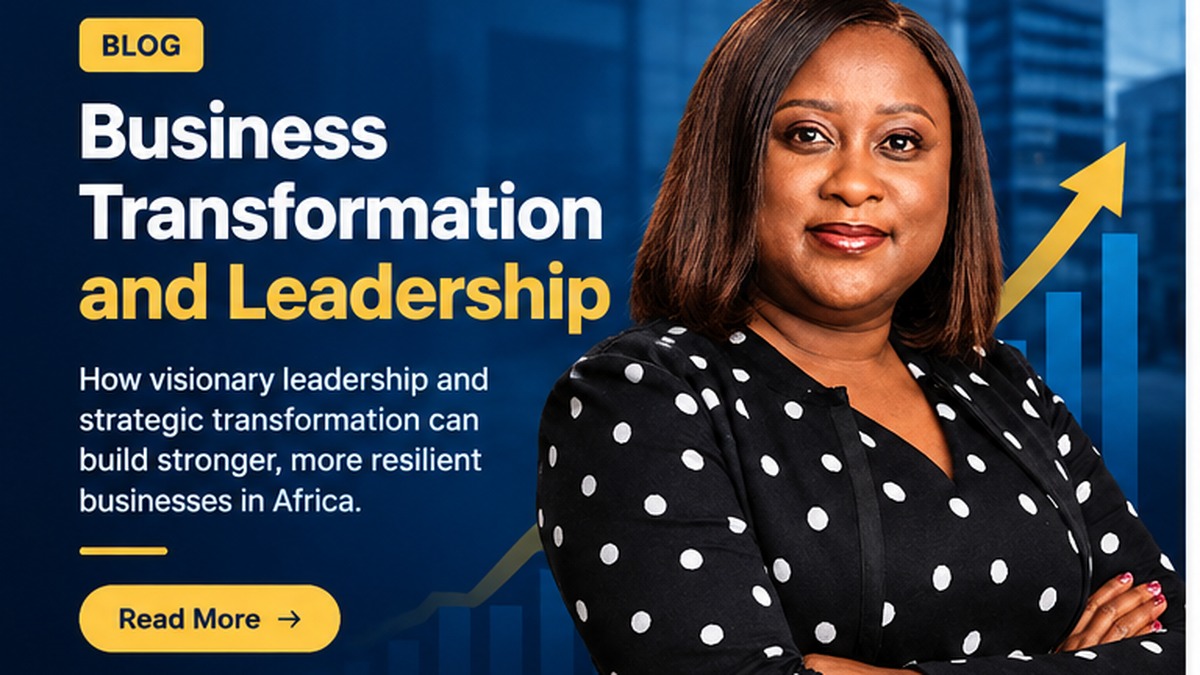
The business environment is constantly evolving. Technology, changing customer expectations, economic developments and increasing competition are reshaping how organizations operate. For African businesses, adapting to these changes is not simply an option; it is an important part of building sustainable and competitive enterprises. At the center of successful transformation is effective leadership. Leaders must be able to recognize opportunities, navigate uncertainty and create an environment where people and organizations can grow. The Importance of Leadership in Business Transformation Business transformation begins with a clear vision. Leaders must understand where their organizations are today and where they want them to be in the future. A strong leadership approach involves setting strategic priorities, communicating a shared vision and ensuring that teams understand their role in achieving organizational goals. Transformation is not only about introducing new systems or technologies. It also involves changing organizational culture, improving processes and empowering employees to embrace new ways of working. Embracing Innovation and Digital Transformation Digital transformation is increasingly influencing the way businesses deliver products and services. Organizations that embrace technology can improve efficiency, strengthen customer experiences and make more informed decisions. For African enterprises, opportunities exist in digital banking, mobile payments, financial technology, automation and data-driven business solutions. However, technology alone does not guarantee success. Organizations need leaders who understand how to align digital investments with business objectives and customer needs. Building Resilient Organizations Resilience is essential in a changing business environment. Businesses must be prepared to respond to economic pressures, market disruptions and emerging risks. Effective leaders encourage adaptability, collaboration and continuous learning. They also recognize that employees are central to organizational success. Creating a culture where people can share ideas, develop skills and contribute to decision-making helps organizations become more responsive and innovative. The Future of African Business Leadership Africa’s economic potential presents significant opportunities for businesses across different industries. Realizing this potential requires leadership that combines strategic thinking, innovation, accountability and a commitment to long-term growth. As organizations continue to transform, leaders must look beyond immediate results and consider the lasting impact of their decisions on employees, customers, communities and the wider economy. Conclusion Business transformation is ultimately about creating organizations that are prepared for the future. Through visionary leadership, strategic investment, innovation and people-centered management, African enterprises can strengthen their competitiveness and contribute to sustainable economic development. The future belongs to organizations that are willing to evolve, learn and lead with purpose.
Business Transformation and Leadership: Building the Future of African Enterprises
The business environment is constantly evolving. Technology, changing customer expectations, economic developments and increasing competition are reshaping how organizations operate.